Pre Employment Screening: Risk Management for Modern HR Departments
In many companies, recruiting has long been digitalized, automated, and geared toward international hiring. Yet precisely at the final stage — verifying candidate information — that professionalism often stops. Resumes are interpreted generously, references are checked only superficially, and legal questions are deferred to data protection. The result is a hiring process that looks modern, but at a crucial point relies on gut feeling.
A professional Pre Employment Screening starts exactly here. It transforms the sensitive phase before contract signing from a zone of uncertainty into a structured, transparent, and legally compliant process. This article shows why companies should not forgo screening today, how they can stay strictly within the boundaries of the GDPR, and what role technology plays in making trust scalable.
When the resume does not tell the truth: The risk of information asymmetry
The labor market has changed fundamentally. In the “war for talent,” companies are under pressure to make decisions ever faster. At the same time, remote processes and video calls reduce the personal impression. This distance creates openings for inaccuracies — economists refer to this as growing information asymmetry.
Studies suggest that a significant share of all resumes are “optimized” — from embellished gaps to invented degrees. For companies, this carries enormous risks:
Financial damage: The cost of a bad hire, including recruiting, onboarding, and severance, often amounts to many times the annual salary.
Reputational risks: An employee in a sensitive position with undetected integrity issues can permanently damage the trust of customers and investors.
Security gaps: In times of industrial espionage and cybercrime, the integrity of the workforce is an essential part of IT security.
A Pre Employment Check is therefore not a bureaucratic hurdle, but a necessary instrument of corporate governance.
Definition: What is Pre Employment Screening?
The term Pre Employment Screening (often also used synonymously as Background Screening or Pre-Employment Check) refers to the systematic, objective verification of relevant information about applicants before an employment contract is concluded.
At its core, the goal is to assess suitability for a specific role and identify risks that could result from false or incomplete information. The key is the change in perspective: we are not conducting a private investigation (“digging around”), but rather a validation of claims the candidate has made themselves.
Depending on the role and risk profile, different components can be combined:
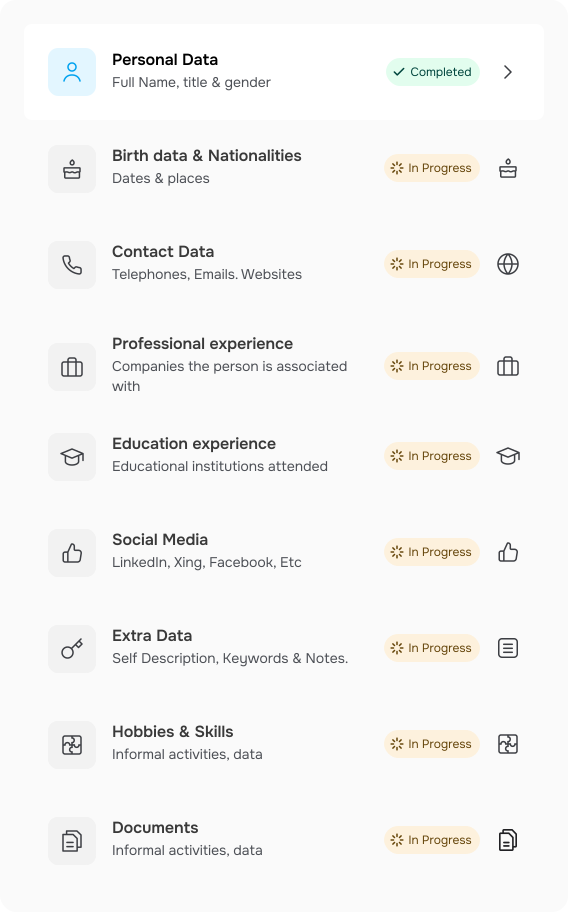
Resume and reference matching: Do the time periods match? Were the positions actually as responsible as stated?
Verification of qualifications: Confirmation of academic degrees and certificates directly with the institutions.
Identity verification: Ensuring that the person is who they claim to be (protection against identity fraud).
Integrity checks: Depending on the role, specific evidence such as credit reports, commercial register extracts, or sanctions lists (compliance).
The reference check in particular provides qualitative insights that neither a resume nor an interview can offer.
When implemented professionally, screening is communicated transparently, documented comprehensively, and justified cleanly from a data protection perspective. It complements interviews and assessments with a reliable factual layer.
Why and when is screening indispensable today?
Not every position justifies the same depth of verification. A working student needs different standards than a CFO. Even so, there are situations in which Pre Employment Screening is more than just an option — it is part of the company’s duty of care.
Scenario A: Financial and strategic responsibility
Whenever decisions have far-reaching financial consequences, the standard for due diligence increases. Typical examples are roles with budget responsibility, access to company accounts, or C-level positions. A hiring mistake here can have lasting effects for years.
Scenario B: Regulated industries & compliance (DORA / ESG)
Banks, insurance companies, and businesses in critical infrastructure are often subject to statutory verification requirements (e.g., by the BaFin or EU regulations such as DORA). Here, screening is not an HR decision, but a compliance necessity to avoid fines.
Scenario C: Signaling to top talent
True A-players want to work in an environment that matches their high standards. A professional check signals to candidates: “Quality is taken seriously here. I won’t have to work with impostors.” Screening thus becomes a marker of employer brand quality.
Process: Steps for successful Pre Employment Screening
How do you set up a process that is secure, but does not put candidates off?
Define the depth of review: Determine which checks are necessary for each job family. (Example: “basic” for everyone, “extended” for management.)
Transparency & consent: Inform the candidate in advance. Obtain explicit consent. That builds trust.
Digital data collection: Use tools that allow candidates to upload documents securely. Avoid email attachments (security risk).
Execution & validation: Compare the data with primary sources (e.g., university databases, commercial registers).
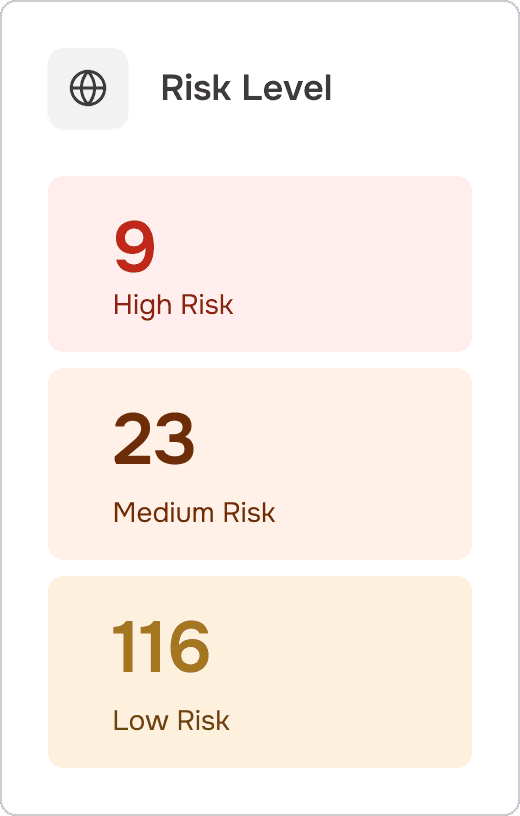
Reporting: The HR department receives a structured report (“traffic light system”). Only verified discrepancies are reported.
Best practices: Lessons from the field
No “shadow IT”: Avoid manual Googling by recruiters. The risk of encountering impermissible information (e.g., pregnancy, illness) is too high (equal treatment law risk).
Speed is key: Use software solutions. Manual follow-ups with universities can take weeks; digital interfaces often deliver results within 24–48 hours.
Mobile first: Candidates expect to complete administrative tasks on their smartphone. A process that requires a printer leads to high drop-off rates.
Practical check: Integration & flexibility
Software is only as good as its fit into your day-to-day work. That is why Indicium adapts to your processes — not the other way around.
🔌 Tailored integration: Do you use Personio, SAP SuccessFactors, or Workday? We do not work in silos. If desired, we can implement a seamless one-click integration into your existing HR landscape. That way, your recruiters start the check directly from the familiar environment, without system breaks.
🌍 Check globally, act European: Many European companies face the dilemma: US providers screen globally, but often fail on EU data protection. Indicium resolves this contradiction. We offer worldwide verification for your international candidates — while consistently applying European data protection standards. That means you can scale globally without importing compliance risks.
📄 Smarter handling of analog hurdles: Not all documents are digital. For example, the police clearance certificate often may not be stored permanently. Our hybrid solution reflects exactly that: the process is managed digitally, the document is reviewed, and only the status is recorded in a legally compliant way: “Certificate seen, no irregularities”. This allows you to fulfill your documentation obligations in an audit-proof way.
💶 Full cost control: Every company grows differently. Choose between our classic SaaS model for continuous demand or flexible pay-per-check packages, where you only pay for what you actually use.
The benefits of Indicium: The “European Way of Trust”
Why should you Indicium for your Pre Employment Screening use? Because we understand that security works differently in Europe than in the US. We offer software that combines technology with ethical responsibility.
🛡️ 100% GDPR compliance: Our algorithms are “privacy by design.” You do not need to be a data protection expert — our software is.
🚀 AI-powered speed: Through intelligent automation and API integrations, we massively reduce time-to-hire.
📱 Best candidate experience: Your applicants complete the check in just a few minutes. No paper, no frustration.
🇪🇺 European focus: We know the local sources and specifics of the DACH market better than global US providers.
Indicium takes the burden of verification off your shoulders so you can focus again on what matters: the people behind the data.
Conclusion: Trust through clarity
In the modern world of work, professional Pre Employment Screening is not a sign of distrust, but a sign of professionalism. It protects your most important asset — your company culture and your reputation — from avoidable risks.
Anyone who uses screening intelligently and digitally gains twice: maximum security for the company and a modern brand experience for the candidate.
Let’s talk about how Indicium can help you with this process.
Disclaimer: This report has been prepared to the best of our knowledge and belief on the basis of the current legal situation in Germany, Austria, and Switzerland. It is intended for general information and does not replace individual legal advice from a lawyer.
Read more — related articles
"In a digital workplace, trust is our most valuable currency. Yet, genuine trust doesn't stem from intuition but from clarity. We empower companies with the confidence to bring the right people on board while maintaining humanity throughout the process."
Nabil el Berr, CEO

Diesen Artikel gelesen? Sprich 30 Min mit unserem Head of Sales.
Die hier beschriebenen Prüfungen automatisiert Indicium: DSGVO-konform, EU/Schweizer Hosting, audit-fester Trail, Reports in 8–30 Minuten. Drei Insight-Essential-Reports kannst Du ohne Kreditkarte testen.
Mabon Hein, Head of Sales · 30 Min · Keine Sales-Pitch