Background Check Definition: What Is It and What Is Allowed?
At a time when resumes are polished by AI, references are edited digitally, and teams are recruited remotely, gut instinct is often no longer enough. We are currently seeing a quiet epidemic of deception: studies show that up to 77% of all companies regularly receive fake resumes. But what exactly helps against this?
In this article, we not only clarify the Background Check Definition, but also take a look behind the scenes. We show you why modern background checks have nothing to do with distrust, but instead are a strategic lever for psychological safety in your team — and how to implement the whole thing in compliance with GDPR.
What Is a Background Check? (Definition)
Let's start with the foundation. A modern Background Check Definition can be summarized as follows:
A background check (also called pre-employment screening) is a structured process in which organizations validate specific background information about a person to ensure they are trustworthy and qualified for the position.
This is not about private curiosity or surveillance. It is about validation. You verify whether the person you are hiring really has the qualifications they claim to have. It is the shift from “blind trust” to “verified trust.”
Alternative names and synonyms: In everyday HR work, you will likely come across different terms:
Pre-employment screening
Background check
Reliability screening
Applicant screening
Due diligence check (in a B2B context)
Why Are Background Checks Conducted? (The 3 Hard Facts)
Maybe you are asking yourself: "Do we really need this? We already have good interviews." The market provides the answer. We see three major drivers that turn background checks from a “formality” into a strategic necessity.
1. Protection Against “Resume Fraud” and AI Fakes
The technology for deception has exploded. It is no longer just about polished gaps.
Level 1 (Embellishment): Minor exaggerations (almost normal).
Level 2 (Fabrication): Completely invented degrees or employers.
Level 3 (Deepfakes): A new, alarming trend. Already 17% of hiring managers report “deepfake candidates” in video interviews. Without technological verification, you can no longer be sure who is really sitting in front of the camera.
2. The Real Economics of a Bad Hire
What does a bad hire really cost you? It is often estimated at a flat 30% of annual salary. Experts (e.g. Kienbaum) significantly correct that upward for the DACH region: the costs are more likely to be 150% to 300% of annual salary. On top of that come the time-to-hire costs: in Germany, backfilling a position takes an average of 55 days. Can you afford to have a key position unfilled — or filled incorrectly — for almost a year?
3. Psychological Safety & Signaling
Here it gets interesting: strict checks attract better candidates (signaling theory). A-players want to work with A-players. When you check professionally, you signal: “Quality matters here. We protect you from toxic colleagues.” That strengthens the morale of the existing team enormously.
What Is Checked in a Background Check?
A background check is not a fixed product, but rather a modular system. Depending on the risk level of the role, the check is made up of different components.
Types of Background Checks
The standard pre-employment check.
Recurring checks: In banks or security-sensitive areas, checks are often carried out annually to see whether new risks (e.g. insolvency, sanctions lists) have emerged.
Business partner due diligence: Before engaging suppliers, you check their integrity (KYBP)
Industries & Roles: Where Is It Mandatory?
Screening is especially critical in regulated industries:
Financial services (DORA/BaFin): Checks for money laundering and financial integrity.
Management & C-level: Protection against reputational damage (the “fake doctor” on the board).
Critical infrastructure & IT: Protection against industrial espionage and sabotage.
The Components in Detail
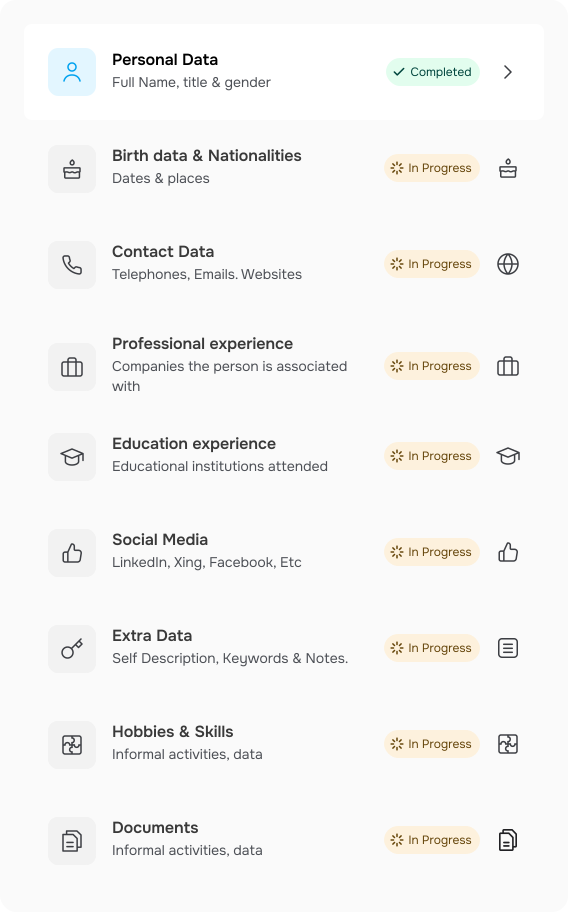
What exactly is looked at?
Identity verification: Is the person real? (Basic defense against deepfakes).
Educational degrees: Does the qualification really exist? (Protection against misuse of titles).
Employment history: Do the timelines match? This is often where “overemployment” cases come to light (secretly holding two full-time jobs at the same time while working from home).
Sanctions lists: Is the person on international terrorism warning lists?
Background Check in Germany: What Is Allowed?
This is often where uncertainty arises. Many people think of U.S. crime shows and private detectives. The reality in Germany is strictly regulated by the GDPR and the Federal Data Protection Act (BDSG).
The guiding principle is: necessity. You may check everything that is necessary for the decision about the specific role.
✅ Allowed: Verification of degrees and professional experience (professional suitability). Research in professional networks (LinkedIn).
⚠️ Conditionally allowed: Police clearance certificates or creditworthiness. Only if the role requires it (e.g. work involving money or children).
⛔ Prohibited: Research in private social media profiles (Instagram), questions about health or family planning.
👉 Do you want to know exactly? Read our detailed guide for HR here.
How Does a Background Check Work? (The Process)
A professional process always follows a clear framework to ensure legal compliance and fairness. Forget manual “Googling” — it is legally risky and inefficient.
The 5 steps of the process:
Obtain consent: Transparency is everything. The candidate agrees to the check digitally.
Collect data: The candidate uploads their documents (e.g. diploma) via a secure portal.
Verify information: The software compares the data with primary sources (universities, commercial register).
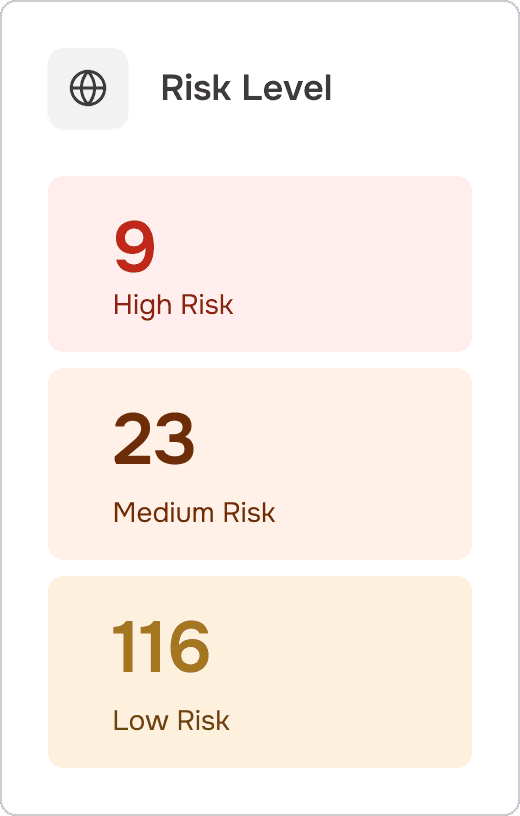
Create a report: You receive a structured report (traffic-light system).
Make a decision: Based on verified facts, you make your choice.
Indicium’s Approach: The “Enabler”
At Indicium, we turn the tables. We are not inspectors looking for mistakes. We are enablers who validate success. Our platform is mobile-optimized, so candidates can complete the check on their phone in 3 minutes. The result: no drop-off rates, just a positive brand experience.
👉 This is how a check with Indicium works
How Long Does a Background Check Take?
That is the key question in the war for talent.
The old way (manual): If your team writes to universities itself or waits for public authorities, it often takes 2 to 4 weeks. That massively increases your time-to-hire — and top talent walks away.
The new way (Indicium): With API integrations and AI automation, it happens in record time.
Identity & sanctions: real time.
Degrees & references: 24 to 48 hours.
Speed is a form of appreciation here. You show the candidate: “We work professionally and we won’t keep you waiting.”
Best Practices for Fair Checks
So your process remains not only secure, but human as well:
Communication: Present the check not as distrust, but as a quality standard (“We ensure a safe team”).
Data minimization: Only check what is relevant to the job. A warehouse worker does not need a credit check.
Standardization: Define fixed packages by job level to avoid discrimination.
Conclusion: Trust Is Good, Indicium Is Better
A background check is no longer a bureaucratic nuisance. It is your insurance against reputational damage, cost explosions, and toxic teams.
In a market where 77% of resumes are “optimized,” validation is the only path to real security. Make your recruiting a zone of trust.
Let’s talk about how Indicium can help you — without headaches and without waiting.
Disclaimer: This report was prepared to the best of our knowledge based on the current legal situation in Germany, Austria, and Switzerland. It is for general information only and does not replace individual legal advice.
Read More — Related Articles
"Background checks have a shadowy existence in the EU; most should conduct them, but few do it correctly. We want to change that!"
Nabil el Berr, CEO

Diesen Artikel gelesen? Sprich 30 Min mit unserem Head of Sales.
Die hier beschriebenen Prüfungen automatisiert Indicium: DSGVO-konform, EU/Schweizer Hosting, audit-fester Trail, Reports in 8–30 Minuten. Drei Insight-Essential-Reports kannst Du ohne Kreditkarte testen.
Mabon Hein, Head of Sales · 30 Min · Keine Sales-Pitch